Driving a Modern, Reliable, Customer-Centric Utility
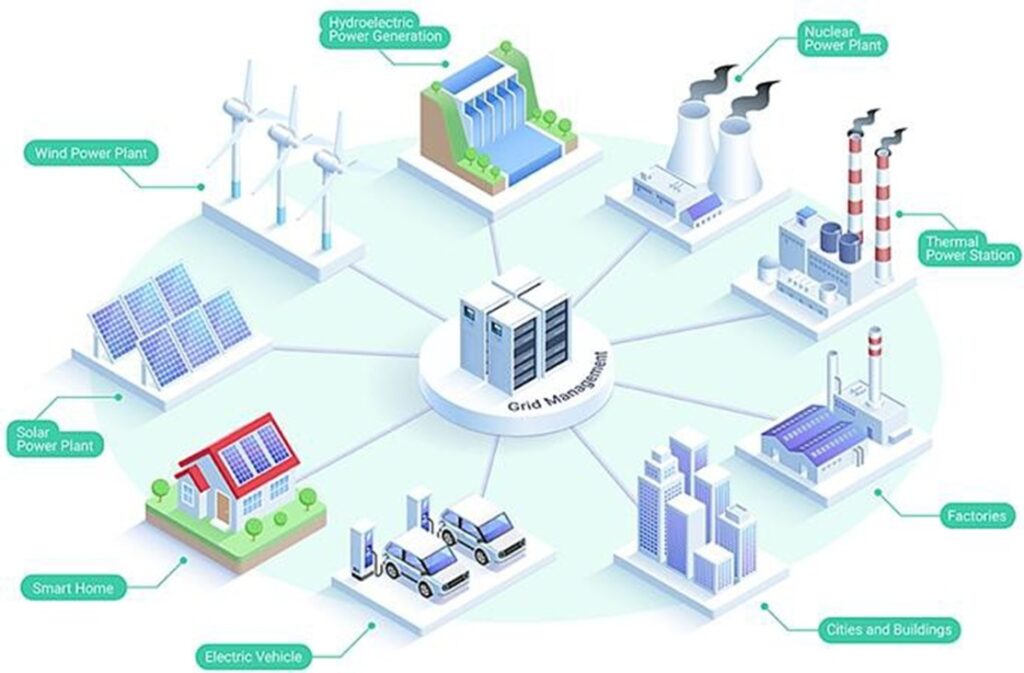
Electricity and utility providers today—spanning generation, transmission, distribution, billing, customer service, procurement, engineering, and regulatory functions—operate in one of the most demanding environments in the public sector. Growing customer expectations, tightening regulatory requirements, aging infrastructure, pressure for cost recovery, and the need for operational transparency all require utilities to rethink how they manage information and
processes.
Digital Transformation is no longer optional. Utilities must adopt intelligent document &
records management systems, workflow automation, and AI-driven process optimization to deliver reliable, safe, and efficient services aligned with national mandates and customer expectations.
This white paper outlines how digital platforms such as ALFO, COMPLY-VISION, and other modern automation solutions directly support the core mandate, vision, and operational needs of Electricity Utilities—including those outlined in the ZESA Holdings Client Charter.
1. The Strategic Imperative for Digital Transformation in Utilities
Electricity utilities are mandated to:
- Provide adequate, safe, and reliable electricity
- Maintain robust generation, transmission, and distribution systems
- Uphold regulatory compliance
- Ensure customer satisfaction
- Maintain financial discipline and operational efficiency
- Provide timely communication and transparency
These goals are impossible to achieve if the organization relies on paper-heavy processes, disjointed legacy systems, manual reporting, and limited process visibility.
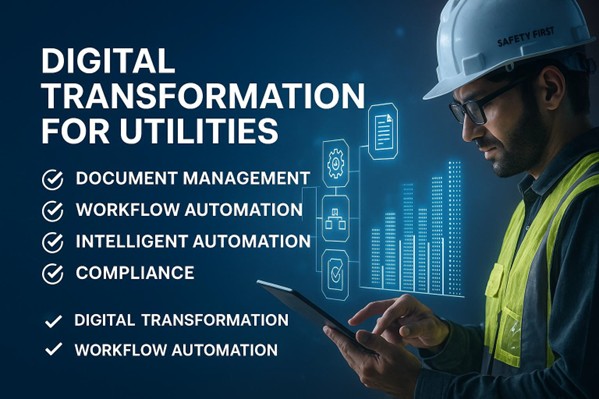
Digital transformation enables:
✔ A unified, accurate, and accessible system of records
Across finance, legal, engineering, procurement, customer service, performance audits, and ICT.
✔ Elimination of manual inefficiencies
Automated workflows reduce delays, errors, and unnecessary administrative burden.
✔ Faster service delivery & better customer experience
Digitized service requests, automated complaint handling, and real-time updates transform how utilities interact with their customers.
✔ Strengthened governance & transparency
A fully auditable document and process trail ensures compliance with regulatory bodies such as ZERA, PRAZ, government ministries, and international partners.
✔ Increased operational resilience
Digital systems ensure continuity during outages, remote work scenarios, staff turnover, or crisis events.
2. Intelligent Document & Records Management: The Foundation of Utility Transformation
Every department in a utility organization produces high volumes of documents and structured/unstructured data:
- Power purchase agreements
- Engineering drawings & technical standards
- Board packs & legal files
- Tariff submissions
- Customer billing records
- Procurement tenders & evaluation documents
- Audit and compliance reports
- Environmental & safety documentation
- Asset maintenance records
- Transmission and distribution incident reports
The absence of centralized, intelligent information management creates:
- Lost or inaccessible records
- Slow decision making
- Audit queries and compliance breaches
- Operational instability
- Fraud and revenue leakages
- Customer dissatisfaction from slow response times
- Inefficiencies that increase operational costs
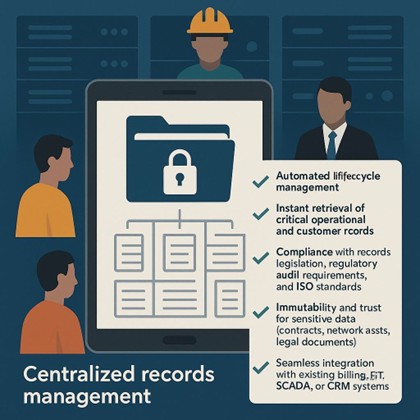
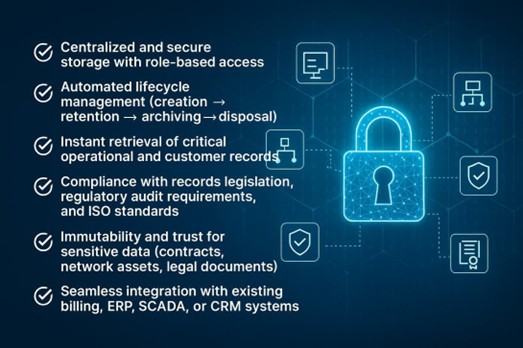
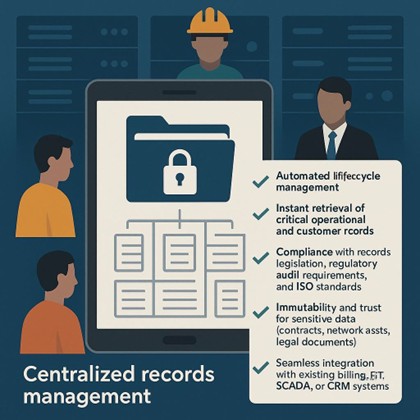
A modern Enterprise Document & Records Management System (EDRMS) such as ALFO & COMPLY-VISION delivers:
- Centralized and secure storage with role-based access
- Automated lifecycle management (creation → retention → archiving → disposal)
- Instant retrieval of critical operational and customer records
- Compliance with records legislation, regulatory audit requirements, and ISO standards
- Immutability and trust for sensitive data (contracts, network assets, legal documents)
- Seamless integration with existing billing, ERP, SCADA, or CRM systems
For utilities, this becomes the information backbone that supports operations, compliance, and customer service.
3. Intelligent Automation: Enhancing Processes Across Key Departments
Utilities rely on hundreds of critical processes across multiple departments. Many of these are manual, complex, and prone to delays or human error.
Examples include:
Finance
- Invoice processing
- Payroll approvals
- Budget consolidation
- Financial reporting
- Loan and creditor management
Customer Service
- Complaint resolution
- Billing issues
- Service request handling
- Connection/disconnection workflows
Procurement
- Tender preparation
- Evaluation workflows
- Contract approvals
- Supplier onboarding
- PRAZ compliance workflows
Legal & Corporate Secretariat
- Board pack preparation
- Contract lifecycle management
- Regulatory submissions
- Litigation documentation
Engineering, Transmission, & Distribution
- Maintenance work orders
- Incident/ fault reporting
- Asset management records
- Safety compliance checks
Internal Audit & Risk
- Whistleblower investigations
- Audit trail management
- Risk reporting
- Performance measurement workflows
ICT
- Change management
- Project approvals
- Security incident documentation
- Technology procurement workflows
Automation ensures that these processes:
- Flow seamlessly from one department to another
- Follow strict timelines and accountability
- Trigger alerts for SLA breaches
- Include escalations when delays occur
- Provide real-time monitoring dashboards
- Reduce administrative workloads significantly
This leads to faster service delivery, higher process reliability, lower risk, and improved customer trust.
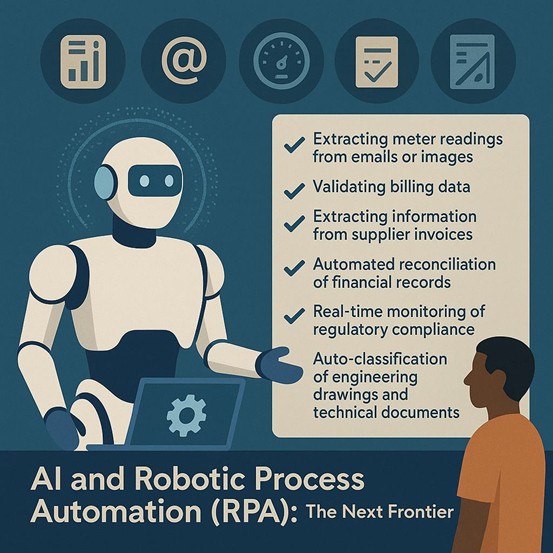
4. AI and Robotic Process Automation (RPA): The Next Frontier
RPA & AI bring additional benefits to utilities by removing repetitive tasks such as:
- Extracting meter readings from emails or images
- Validating billing data
- Extracting information from supplier invoices
- Automated reconciliation of financial records
- Real-time monitoring of regulatory compliance
- Auto-classification of engineering drawings and technical documents
This allows skilled staff to focus on higher-value activities essential to the organization’s mission.
5. Digital Transformation Strengthens Every Core Value and Critical Success Factor
Digital transformation directly supports the utility’s core values:
Utility Core Value How Digital Transformation Supports It
- Client Focus Faster service delivery, accurate billing, efficient complaint handling
- Integrity Immutable audit trails, secure record keeping, transparent processes
- Innovation AI, RPA, mobile workflows, cloud systems
- Accountability Automated SLA tracking, role-based access, audit logs
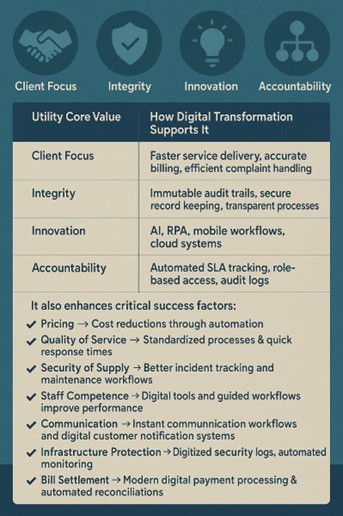
It also enhances critical success factors:
- Pricing → Cost reductions through automation
- Quality of Service → Standardized processes & quick response times
- Security of Supply → Better incident tracking and maintenance workflows
- Staff Competence → Digital tools and guided workflows improve performance
- Communication → Instant communication workflows and digital customer notification systems
- Infrastructure Protection → Digitized security logs, automated monitoring
- Bill Settlement → Modern digital payment processing & automated reconciliations
- Compliance → Full alignment with ZERA, PRAZ, environmental & safety requirements
6. The Strategic Benefits for Utilities For Operations
- Reduced outages through smarter maintenance workflows
- Real-time visibility of processes and records
- Stronger governance and compliance
- Lower administrative overhead
For Customers
- Faster responses
- Accurate billing and transparent processes
- Improved communication channels
- Higher trust in the utility
For Leadership
- Better decision-making from real-time data
- Lower operational risk
- Strategic alignment across departments
- Improved organizational performance metric
Conclusion: Building the Utility of the Future
Electricity utilities must evolve to meet the demands of a rapidly changing energy landscape. Intelligent Document & Records Management, Digital Workflow Automation, and AI-driven optimization provide the foundation for a modern, resilient, customer-centric utility.
By adopting platforms like ALFO and COMPLY-VISION, utility organizations can:
- Streamline operations
- Improve compliance
- Strengthen governance
- Enhance customer satisfaction
- Optimize every area of their mandate—from generation to customer service
Digital transformation is not just an IT initiative……. It is the cornerstone of building a reliable, accountable, future-ready utility service.